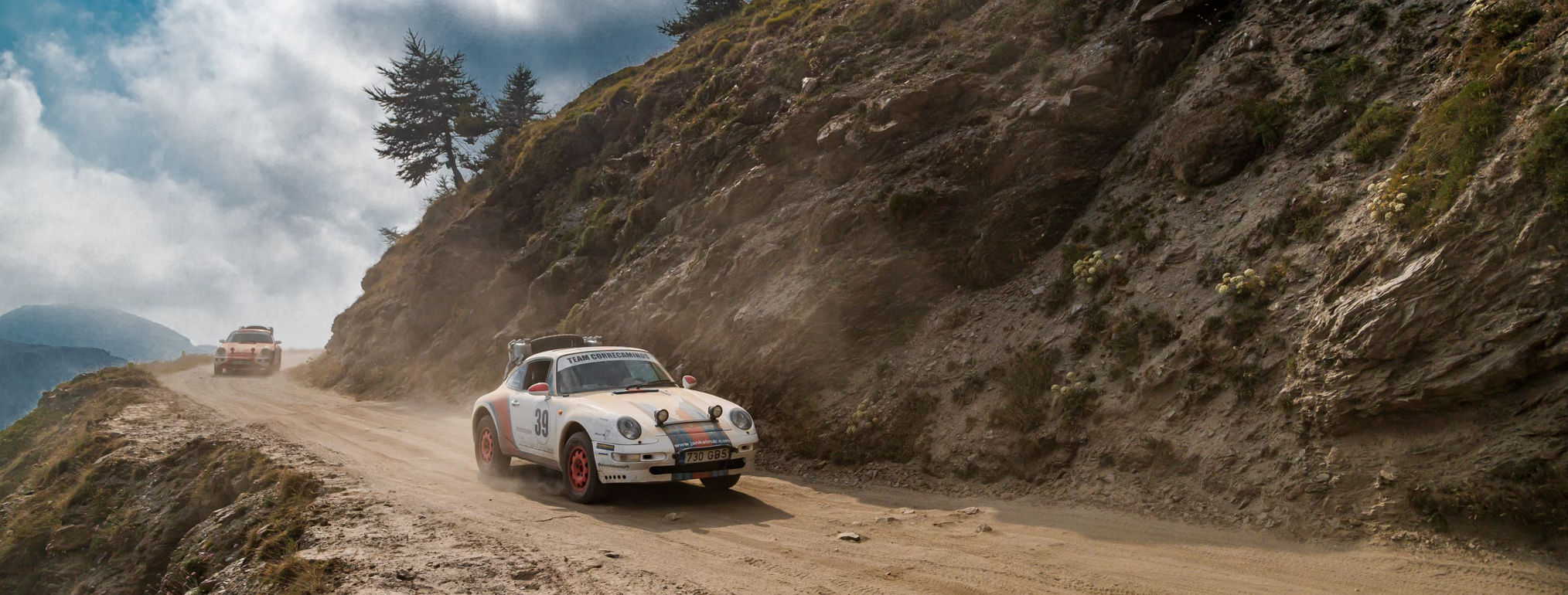
The appeal of the Jan Kalmar off-road 911 is easy to understand once you see it in its natural habitat: moving quickly across broken surfaces, staying composed, and making rough country feel like part of the route rather than an obstacle. What makes it compelling is not theatre alone, but the discipline behind the concept a focused machine shaped for distance, poor terrain, and drivers who care as much about feel as they do about finish.
This is where many raised-ride sports cars lose credibility. Some are styled for adventure but not engineered for repeated use away from smooth tarmac. Others lean so far into spectacle that they give away the precision that made the original platform desirable in the first place. The Jan Kalmar off-road 911 sits in a more exacting space: it respects the source material, then reworks it around a serious brief — speed, durability, and confidence across the kind of roads most people avoid.
What the Jan Kalmar off-road 911 is really for
To understand the car, it helps to begin with intent rather than appearance. This is not an urban status object with all-terrain tyres, and it is not a stripped competition tool made awkward by compromise on the road. Its purpose is more nuanced: long-range driving where the surface changes repeatedly, weather matters, and the driver wants both engagement and reassurance.
That distinction matters because off-road ability means different things depending on the user. For some, it means climbing over severe obstacles at low speed. For a car like this, it means covering serious ground at pace while preserving control, visibility, and mechanical integrity. Gravel, washboard, ruts, cambers, poor weather, and remote mileage place very different demands on a chassis than smooth circuit driving. The best adventure-focused builds are designed around that reality.
In that sense, the Jan Kalmar off-road 911 is less about novelty and more about access. It opens routes that conventional road setups would make tiresome or risky, while retaining the fluency and character enthusiasts expect from a rear-engined sports car. That blend is rare, and when it is done badly, the shortcomings show quickly.
Why the formula works
The appeal begins with the basic architecture. A compact footprint, useful mechanical traction, and strong feedback give this type of platform an unusual versatility. When re-engineered correctly, it can feel alive on loose ground without becoming nervous. That is the sweet spot.
A successful off-road 911 build depends on restraint as much as ambition. More ride height sounds attractive, but too much can upset balance, steering clarity, and confidence at speed. The same applies to tyres, suspension travel, and underbody protection. Each choice affects another. Raise the car too far and it may look dramatic but lose cohesion. Fit overly aggressive tyres and you may gain visual intent while giving away precision and refinement on mixed stages.
That is why the strongest examples feel integrated rather than modified. They do not present as a collection of parts. They behave like complete cars. The steering still communicates, the damping feels resolved, and the added capability does not come with a constant penalty in normal driving. For discerning owners, that distinction is everything.
Engineering over costume
The market has no shortage of machines dressed in adventure cues. Auxiliary lamps, roof equipment, and protective detailing can be effective, but only if they follow genuine mechanical development. Serious work happens lower down: suspension geometry, damping calibration, weight control, wheel and tyre pairing, cooling, protection, and reliability under extended load.
A credible interpretation also understands that remote driving is hard on components. Heat, dust, repeated impacts, and sustained distance expose weak decisions quickly. The result should not merely survive a staged photo opportunity. It should remain composed on the third long day, when the route turns rough, the weather closes in, and fatigue starts to matter.
The character of a Jan Kalmar off-road 911
Character is where this kind of car either becomes memorable or forgettable. The best ones combine a sense of occasion with an unusual calm. You sit a touch higher, read the road further ahead, and carry more confidence over imperfect surfaces, yet the connection through the controls remains intact.
On tarmac, the car should not feel blunted. It may move with a little more compliance and show a touch more tyre movement than a road-focused setup, but that is part of the point. A machine built for real distance should absorb rather than merely resist. The route is seldom one thing for long. A polished mountain pass can become patched single track, then gravel, then wet broken asphalt. A well-resolved car makes those transitions feel natural.
That breadth of ability also changes the psychology of driving. You become less protective, less inclined to turn back when the map gets interesting. The journey widens. And for a certain kind of enthusiast, that is more valuable than a marginal gain in ultimate grip on perfect roads.
Adventure as the brief
There is a reason this category has gained traction among experienced drivers. It aligns with how many enthusiasts actually want to travel. Not everyone wants a tightly scheduled circuit day, or a static collector object kept at arm’s length from weather and terrain. Many want movement, scenery, challenge, and the satisfaction of covering serious ground in a machine with real depth. [instagram]
The Jan Kalmar off-road 911 suits that brief because it turns the car into a companion for remote driving rather than a fragile indulgence. It invites early starts, changing conditions, and roads that would normally demand a second vehicle. That does not mean it replaces specialist expedition machinery. There are always trade-offs. Extreme terrain still favours different formats, and no sports-car-derived platform can ignore the realities of ground clearance, storage, and approach angles.
But most compelling driving experiences do not happen in extreme terrain. They happen on imperfect roads in remarkable landscapes, where pace, placement, and stamina matter more than rock-crawling theatrics. This is exactly the territory where an off-road-focused sports car becomes deeply persuasive.
Who it is for
This kind of machine is not aimed at the driver who wants the cheapest route into ownership, nor at someone interested only in concours correctness. It is for those who value intent. People who understand that the finest vehicles are often defined by how clearly they answer a question.
The question here is simple: what should a high-end driver’s car become if the route extends beyond smooth roads and into serious country? If that proposition resonates, the concept makes immediate sense. If your driving is confined to city streets and occasional fair-weather runs, the rationale may feel excessive.
That honesty is part of the appeal. Great niche vehicles do not try to please everyone. They serve a specific appetite at a very high level.
More than a vehicle
There is also a cultural reason the idea has staying power. Driving enthusiasm has shifted. Ownership alone is no longer enough for many seasoned clients. They want use, narrative, and access to places that feel earned. A machine like this supports that mindset. It suggests movement with purpose.
Within the broader world of curated automotive experiences, that matters. A well-prepared car can transform not only pace and comfort, but the kind of route an organiser can confidently build around it. It changes the map. That is one reason KALMAR Beyond Adventure sits so naturally in this space: the vehicle and the experience are aligned around the same values of capability, craft, and distance.
The most interesting thing about the Jan Kalmar off-road 911, then, is not that it breaks the rules of the sports car. It is that it reframes them. It asks what happens when precision engineering meets rough-surface intent, and answers with a machine that feels both improbable and completely logical once driven properly.
For the right owner, that is the real attraction. Not simply standing apart, but going further with confidence, style, and a clear sense of purpose when the road gives way to something better.