
The first real lesson in Namibia arrives when the tarmac disappears. Tyre pressures are adjusted, the horizon suddenly expands, and the car begins communicating every change in the terrain through the steering wheel. This is where KALMAR Beyond Adventure Namibia truly begins — an expedition created for drivers who want to experience one of the world’s most extraordinary landscapes from behind the wheel of specially prepared Porsches.
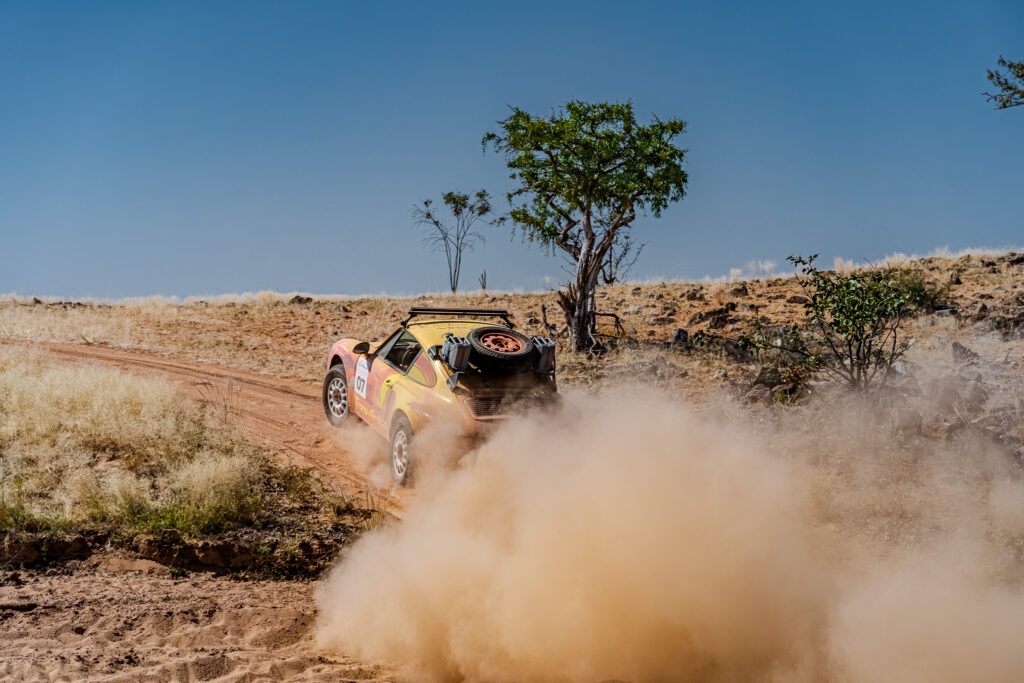
This is not a sightseeing tour where the driving is simply a way to reach the next destination. In Namibia, the route itself is the experience. Endless gravel roads, remote desert valleys, dry riverbeds and vast open landscapes create a unique environment where preparation, technique and the connection between driver and machine matter.
Namibia rewards commitment. Its roads can run arrow-straight for hundreds of kilometres, then suddenly change character. Gravel becomes rougher, sand appears unexpectedly, and corrugations test both driver and vehicle. This is exactly why KALMAR Beyond Adventure approaches every expedition with careful route planning, professional support and vehicles prepared specifically for the conditions.
Why Namibia is made for KALMAR Beyond Adventure
Few places on earth offer such a diverse and uncompromising driving environment. One day may take the group across the highlands on flowing gravel roads, the next through dramatic desert landscapes, remote valleys or sections where careful momentum and smooth inputs become essential.
Distances are vast, traffic is almost non-existent and the landscape constantly changes. Namibia gives drivers the freedom to explore, but it also demands respect. Routes must be planned around fuel range, weather, terrain, daylight and access to support. A line drawn on a map is only the beginning — the real expedition starts when the wheels leave the familiar roads behind.

The specially prepared Porsches used by KALMAR Beyond Adventure are designed for exactly this kind of journey. Increased ground clearance, carefully selected tyres, suspension development and additional protection allow the cars to travel confidently beyond normal road conditions while maintaining what makes a Porsche special: involvement, precision and driver connection.
The goal is not to create an off-road vehicle wearing a Porsche badge. It is to take a performance car and expand its possibilities — allowing drivers to experience places that were never intended to be reached by ordinary sports cars.
 The driving is the heart of the expedition
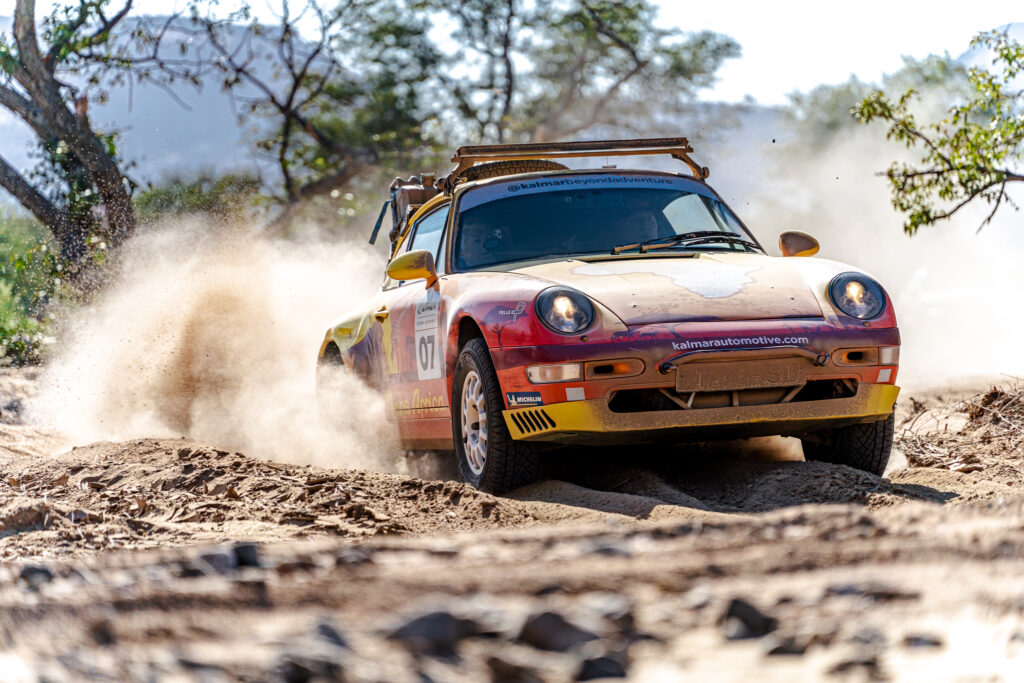
A KALMAR Beyond Adventure expedition is not about simply connecting one landmark with another. Every driving day has its own rhythm: technical sections requiring concentration, faster gravel stretches where reading the surface becomes part of the challenge, and moments where the only signs of civilisation are the tracks left by those who travelled before.
Gravel is at the centre of the Namibian experience. It can be fast, flowing and incredibly rewarding, but it also requires respect. The surface changes constantly depending on weather, maintenance and traffic. Looking ahead, managing weight transfer and keeping the car balanced become far more important than outright speed.
Sand creates a completely different challenge. It rewards patience, smooth steering and an understanding of momentum. Sometimes the terrain reminds you that even the best-prepared vehicle still depends on the decisions of the person behind the wheel. These moments are not problems to remove from the experience — they are part of what makes a true expedition memorable.
The best routes combine challenge and enjoyment. They push drivers beyond familiar environments while ensuring that every kilometre has a purpose.
 Preparation creates freedom
Remote driving should feel adventurous, not improvised. Before every KALMAR Beyond Adventure Namibia expedition, routes, vehicles and logistics are carefully prepared to handle the conditions ahead.
Vehicle preparation covers the essentials: tyres, suspension, protection, cooling, recovery equipment, communication systems and all necessary expedition equipment. The same attention applies to the organisation of the journey itself — fuel planning, support vehicles, emergency procedures and local knowledge are what allow the group to explore confidently.
Professional support does not remove the driver from the experience. Quite the opposite. It allows participants to focus on what matters most: reading the terrain, improving their skills and enjoying the connection between car and landscape.
Convoy discipline is also an important part of every expedition. The strongest groups are not defined by speed, but by communication, cooperation and respect. Everyone contributes to the experience — from helping with a difficult section of terrain to sharing the stories that naturally appear after a long day behind the wheel.
 Small groups create a different experience
KALMAR Beyond Adventure keeps groups limited to create a more personal and engaging expedition. Smaller groups allow more flexibility, better communication and more time to enjoy every part of the journey.
The moments that stay with participants are often not only the spectacular landscapes. They are the shared experiences along the way: discussing the route before a challenging section, helping each other through difficult terrain, exchanging stories over dinner or arriving at a remote lodge after a day that demanded genuine focus.
People join because of the cars, but the adventure is created by the people around them.
Adventure during the day, comfort at night
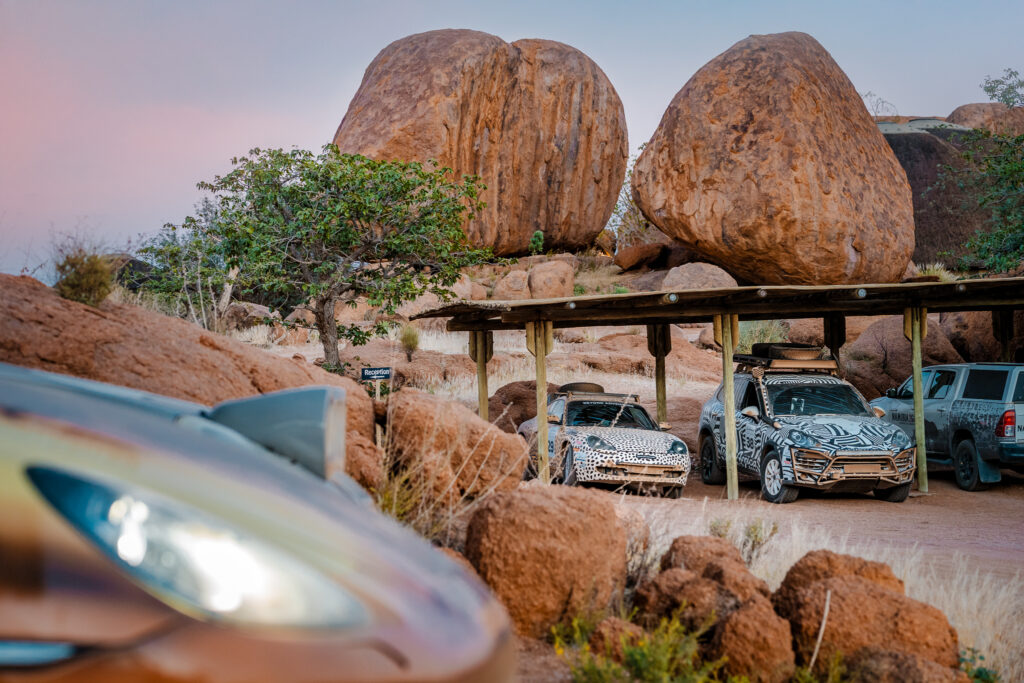
Namibia offers a rare balance between demanding driving and exceptional places to stay. After hours of heat, dust and concentration behind the wheel, a carefully selected lodge becomes the perfect place to relax, reflect and prepare for the next stage.
Comfort is not a replacement for adventure — it is what makes the adventure sustainable. The best expeditions combine challenging routes with moments of relaxation, allowing drivers to fully appreciate both sides of Namibia.
The day belongs to the road. The evening belongs to sharing stories, reviewing the route and preparing for what comes next.
 What to expect from KALMAR Beyond Adventure Namibia
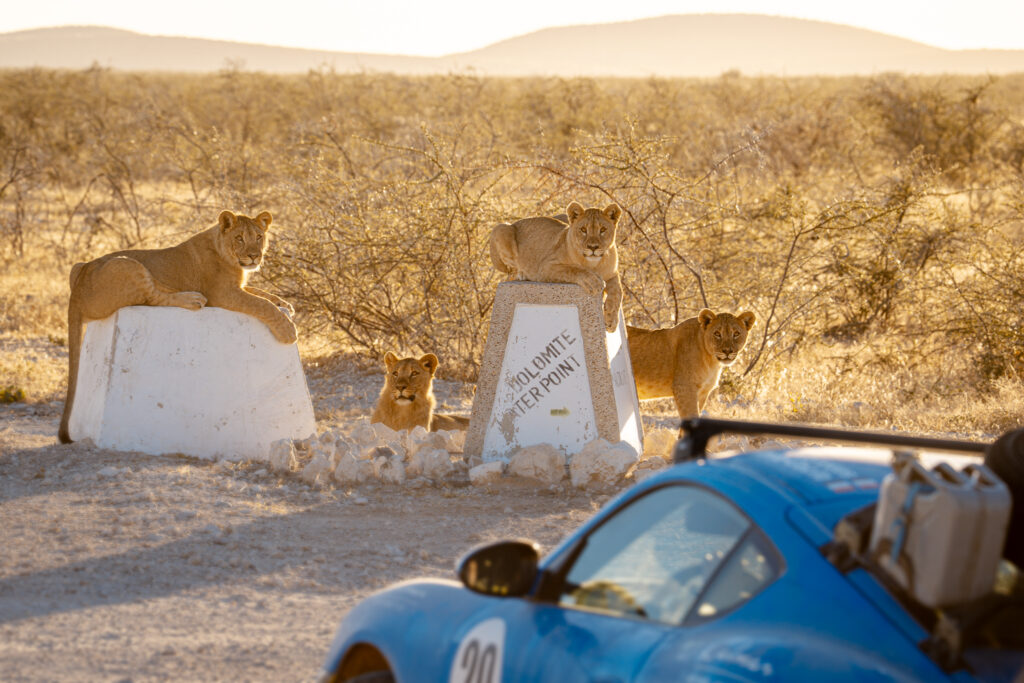
Expect early starts, long distances, changing terrain and landscapes that constantly challenge your expectations. Expect gravel roads stretching beyond the horizon, remote locations that few travellers reach and driving experiences that cannot be recreated on ordinary roads.
Do not expect a standard guided tour. KALMAR Beyond Adventure Namibia is designed for people who want to actively participate — to drive, explore and experience the country rather than simply observe it.
You do not need to be a professional rally driver. You need curiosity, respect for the environment and a willingness to embrace the unexpected. The most rewarding moments often come when the planned route meets the reality of the landscape.
Because in Namibia, a car earns its place by being used. Beyond the final fuel stop and beyond the easy roads, that philosophy becomes real — one kilometre, one challenge and one unforgettable view at a time.
