Namibia Expedition Tours
Some journeys are defined by distance. Namibia expedition tours from Europe are defined by texture – fast gravel stretching to the horizon, desert light that changes by the minute, and the rare pleasure of driving with purpose in a landscape that feels almost editorial in its clarity.
For the right traveller, Namibia is not simply another long-haul experience. It is one of the few places where remote terrain, strong route logic and high-end hospitality coexist without compromise. That matters if your idea of travel includes line choice, surface feel and the quiet satisfaction of a machine working exactly as it should. It matters even more if you want the romance of the unknown without the administrative burden that usually comes with genuine overland driving.
Why Namibia expedition tours from Europe stand apart
Namibia rewards a certain mindset. It is vast, dry and disciplined in its beauty. Roads are rarely busy, horizons feel genuinely open, and the country has an unusual ability to make a day behind the wheel feel both calming and exacting. For drivers coming from Europe, that contrast is part of the draw.
The practical appeal is obvious. Flight connections from major European hubs are manageable, the time difference is not punishing, and the destination feels meaningfully far from familiar routines without being operationally chaotic. Yet convenience is only part of the case. The stronger argument is that Namibia offers one of the cleanest combinations of remoteness and drivability anywhere in the world.
That phrase deserves precision. Not all remote destinations suit a performance-minded expedition. Some are visually arresting but mechanically punishing in the wrong way, with endless low-speed attrition and little rhythm. Others are easy enough to cross but lack atmosphere once the novelty fades. Namibia sits in the narrow band where the route itself becomes the experience. Gravel roads can flow. Distances feel consequential. Every stop has context.
What discerning drivers should expect
A premium expedition in Namibia should never feel improvised. The setting is wild, but the structure behind it must be exact. The best programmes remove friction without sanitising the journey.
That begins before departure. European travellers should expect clear planning around flights, arrival windows, luggage strategy and what will actually be needed on the ground. Overpacking is common on first-time African expeditions, especially when travellers imagine constant roughing it. In reality, the strongest itineraries balance remote driving with refined accommodation, so gear can remain disciplined and purposeful.
On the route, vehicle preparation is not a side note. It is the foundation. Namibia exposes weaknesses quickly: heat, corrugations, loose surfaces and long daily distances all favour machines prepared with care rather than merely styled for adventure. This is where a properly sorted platform changes the tone of the whole experience. A well-developed expedition car should feel composed on gravel, resilient over distance and comfortable enough that fatigue never dulls the pleasure of the drive.
Support also matters, although the best support is often felt more than seen. Good convoy management, route intelligence, luggage handling, fuel planning and technical oversight allow drivers to focus on the road rather than the mechanics of transit. That distinction separates serious expedition travel from loosely packaged self-drive tourism.
The route is everything
When people discuss Namibia, they often default to the scenery. Fair enough – the country is visually extraordinary. But on a high-end driving experience, route design is the real craft.
A strong Namibia itinerary does not try to see everything. It selects. It understands where pace should build, where isolation should deepen and where a lodge arrival should feel earned rather than convenient. There is a difference between covering miles and composing a journey.
The southern deserts deliver scale and stillness. Damaraland introduces a more rugged, sculptural quality, with terrain that feels ancient and deliberate. The Atlantic edge brings another register entirely, where fog, sand and ocean create a stark, almost cinematic atmosphere. Each region has its own tempo, and forcing them into a rushed schedule weakens all of them.
For travellers departing Europe, this is often the first real decision point. Do you want breadth, or do you want depth? A broader route may appeal on paper, but it can become a sequence of transfers rather than a coherent expedition. A more focused itinerary tends to be richer. It leaves room for the road to breathe and for the destination to reveal itself gradually.
Choosing the right format for Namibia expedition tours from Europe
There is no single correct way to experience Namibia, but there are clear differences between formats. A standard fly-drive suits travellers who prioritise independence and are comfortable handling route planning, lodging reservations, punctures, permits and timing without assistance. It can work, but it places a surprising amount of attention on logistics.
A small-group expedition is different. It offers the freedom of driving for yourself while retaining the discipline of a curated programme. Done properly, the group does not dilute the experience – it sharpens it. You gain route confidence, technical support and a shared sense of momentum, without losing the intimacy that makes remote travel worthwhile.
Private bespoke travel has its place, especially for those with very specific preferences or limited time. Yet there is an argument for a carefully selected group of like-minded drivers. The right cohort creates a particular atmosphere: informed conversation at dinner, quiet competence on the route, and the sense that everyone has arrived for the same reasons. For an enthusiast audience, that shared standard can elevate the entire experience.
Vehicle character matters more than brochure language
Namibia has inspired plenty of generic adventure marketing, much of it interchangeable. What it cannot fake is how a car feels after several hundred kilometres of gravel.
This is why platform choice deserves sober attention. A vehicle for this environment should offer durability, travel, visibility and reassuring mechanical honesty. It should also retain character. Enthusiasts do not travel this far to pilot something anonymous.
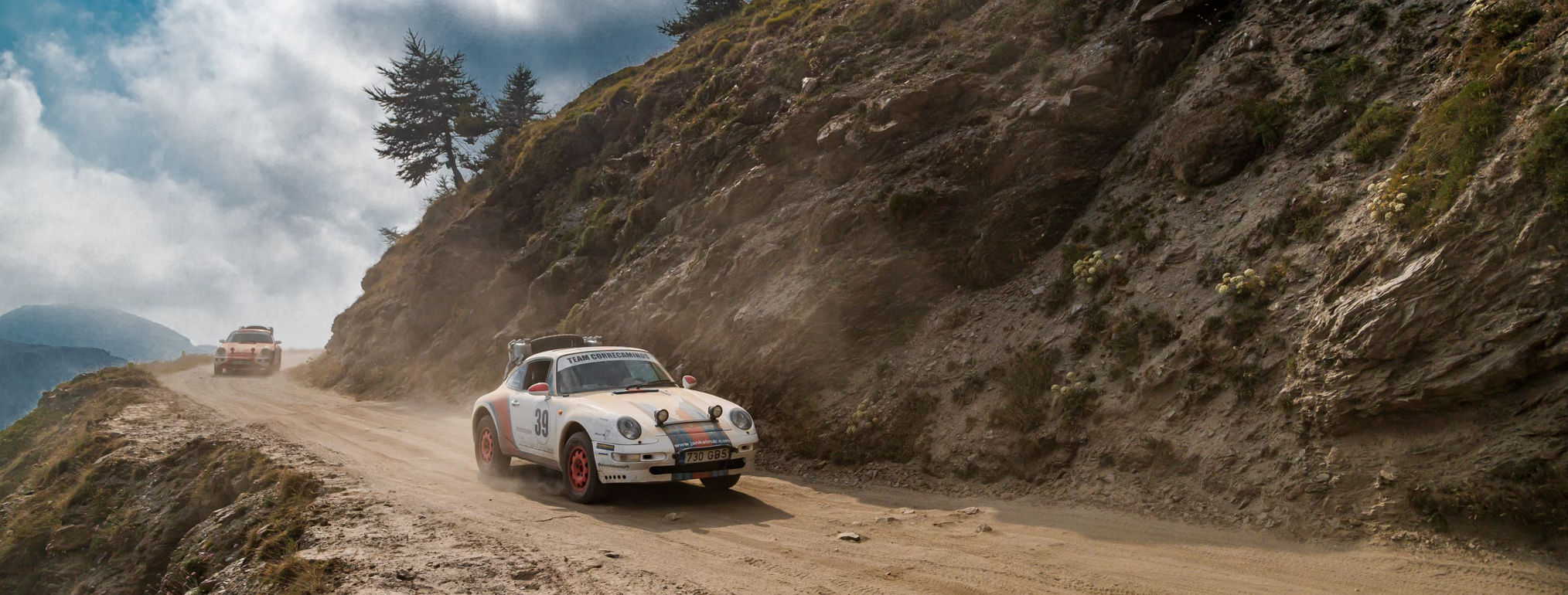
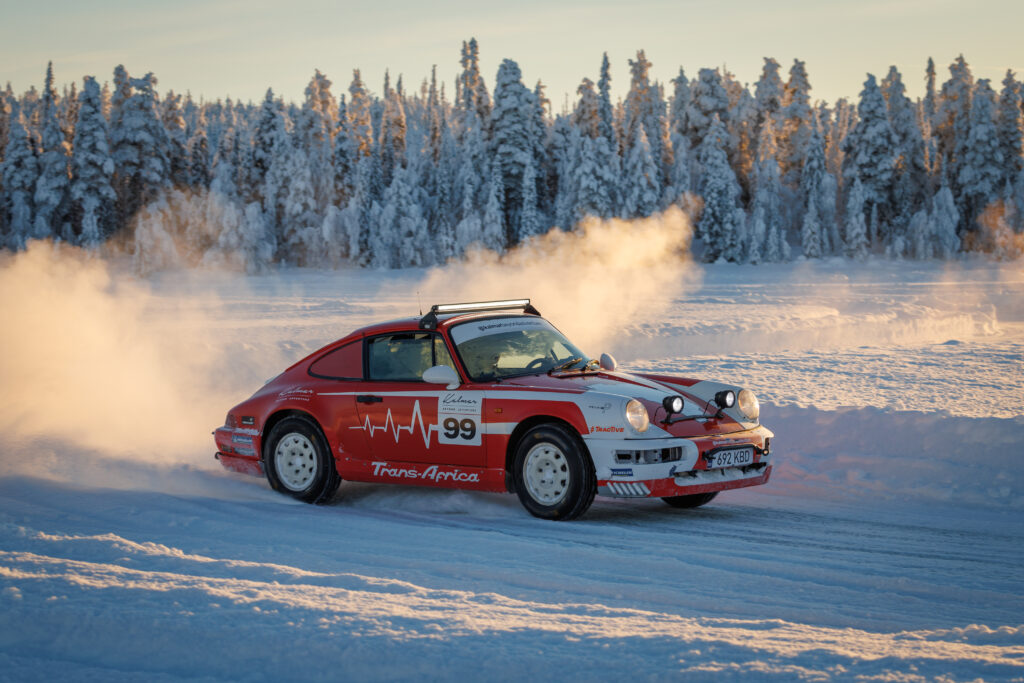
That is where rally-inspired expedition thinking comes into its own. A KALMAR prepared Porsche, developed with genuine respect for terrain rather than image, changes the equation. It brings precision and identity to a landscape large enough to deserve both. The result is not off-road theatre. It is a more involving way to cover serious ground, one that speaks equally to engineering credibility and the emotional side of driving.
There is, of course, a trade-off. A focused enthusiast vehicle asks something of the driver. You are not detached from the terrain. You are engaged with it. For the right audience, that is the entire point.
What high-end hospitality should look like in Namibia
Remote does not need to mean austere. In fact, Namibia is at its best when demanding days on the road are paired with places of real quality at night.
That does not mean excess. It means lodges chosen for setting, service, food and a sense of calm that resets the body after a long drive. The strongest properties in Namibia understand restraint. They work with the landscape rather than against it, offering comfort without breaking the spell of the environment.
For European travellers used to polished standards, this is reassuring. A serious expedition can still include excellent wine, thoughtful hospitality and rooms that feel resolved rather than rustic by default. The point is not indulgence for its own sake. The point is rhythm – long, absorbing driving days balanced by spaces that restore attention for the next morning.
Who this kind of journey is really for
Namibia is not a first choice for everyone, and that is part of its value. If your ideal trip centres on cities, shopping or a packed social calendar, other destinations will suit you better. Namibia rewards travellers who appreciate space, machinery, understatement and a certain level of self-possession.
It particularly suits those who have already done the obvious routes. If the Alps, Tuscany or the South of France no longer feel sufficiently distant, Namibia offers a more compelling proposition. The roads are less performative. The scenery is less familiar. The sense of occasion is stronger because it has not been manufactured.
For couples, friends or solo travellers within a well-curated group, it can be exceptionally effective. You spend the day in motion and the evenings in places where conversation tends to be better than usual, perhaps because the setting strips away distraction. That is often the hallmark of a great expedition: not noise, but clarity.
KALMAR Beyond Adventure understands that distinction. The ambition is not to sell remoteness as spectacle, but to frame it through capable vehicles, disciplined planning and a standard of travel that respects both the road and the people on it.
If you are considering Namibia from Europe, look past the broad promises and examine the composition of the experience. The best journeys here are not crowded with features. They are measured, mechanically credible and quietly unforgettable. Choose one that treats the drive as the reason for going, and Namibia tends to give back more with every kilometre.